Whenever I get gloomy with the state of the world, I think about the arrivals gate at Ottawa airport… It seems to me that love is everywhere.
This week, I picked up a very special package from the Ottawa airport. Kid #2 arrived on a Porter Airlines flight on Wednesday morning after being down east at school for the past four months.
So maybe love wasn’t everywhere when I went to pick Clare and maybe I ripped off that line from the opening scene of Love Actually, but the feelings of love and anticipation of seeing Clare after her being away for so long has made me a romantic at heart.
I love that opening scene from the movie, parents reuniting with children, old friends slapping each other on the back, and husbands and wives, boyfriends and girlfriends kissing and hugging each other with misty tearful eyes.
The reality of course was slightly different. I didn’t actually go into the Ottawa terminal. I missed the turn for the arrivals lane after seeing a sign that said Car Rental Return and had to make a U-turn and circle around the endless airport loop, Grace remonstrating with me and calling me a loser the entire way.
If we had entered the terminal, instead of seeing happy smiling faces reuniting, we probably would have seen half a dozen people making a frantic 100-yard dash to the bathroom after their seven-hour flight, another half a dozen cursing at their phones because the person picking them up was late, and at least one exhausted mother with two snotty-nosed kids trying to find her Uber.
I mean, c’mon. It’s not like we were going to see a young buxom brunette hopping into the arms of the Prime Minister. Wait, hold the ministerial phone. Did I just see Katy Perry launch herself at Justin at the gate, his strong arms encircling her while she wears a jaunty beret? Maybe the movie is true to real life after all.
The point is, maybe love actually can be found in an airport terminal. One thing is for certain. You have a better shot at finding love than your luggage if you fly Air Canada.
This week’s #HappyAct is my Christmas wish for you: to have a sweet reunion with someone you love. Happy holidays, and be sure to check back next week for my top ten happy acts of 2025.
Over the years, I’ve shared many of my favourite things about the holidays. To me, Christmas has never been about one day, or the presents under the tree. It’s about all the small moments and simple joys that make this time of year special and bring me happiness and peace.
Frosty cold mornings and snow laden trees And favourites like Elf, Home Alone and White Christmas on TV
Pretty green garlands of fresh spruce and pine Glasses of egg nog, hot cocoa and wine
Local church concerts and carols sung on high Finding the perfect gift then waiting for the Amazon guy
Filling the gaps in our old Christmas tree With shiny bright lights, homemade ornaments and memories
White chocolate-dipped Oreos and Mrs. Garrett’s butter tarts Nanaimo bars and haystacks and shortbreads cut in hearts
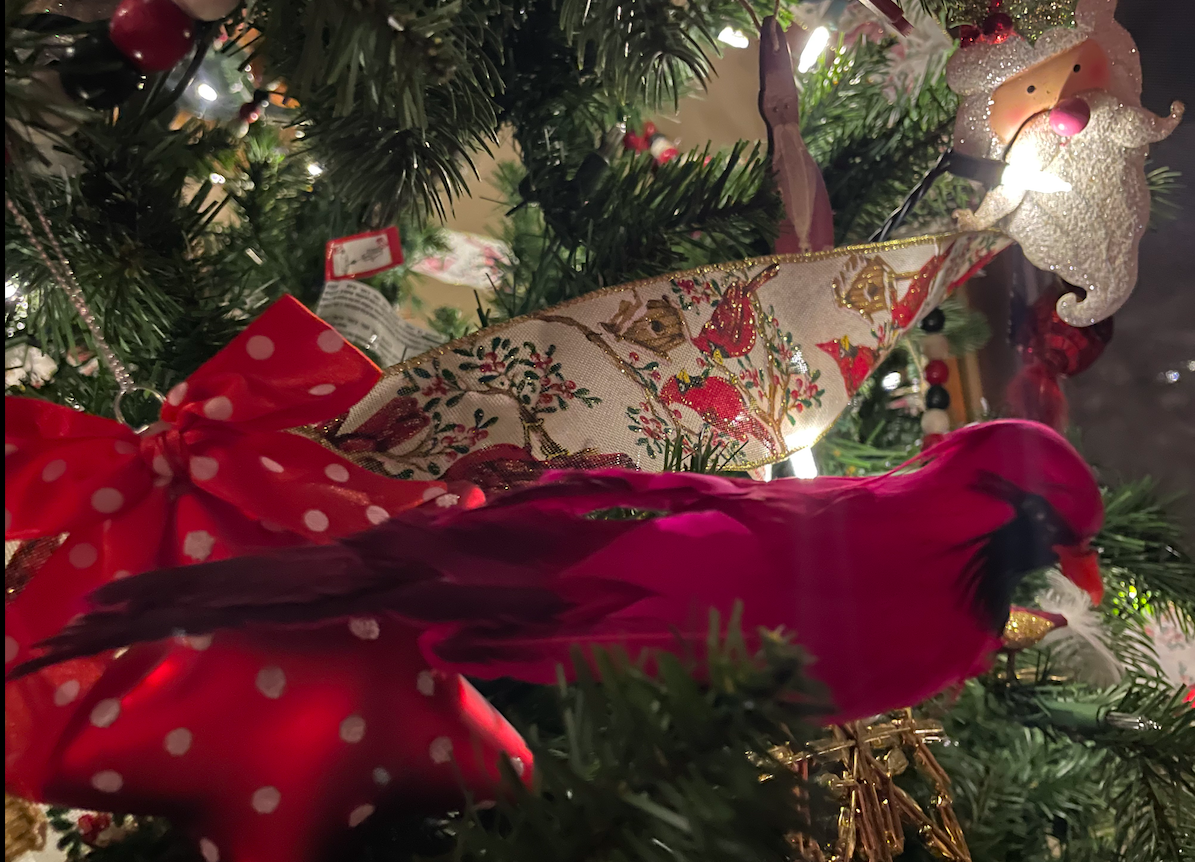
Candles glowing softly and red cardinals in the air Reminders of those we’ve lost but still with us everywhere
Bowie and Crosby, The Pogues and Buble Handel’s Messiah king of kings on Christmas Day
Gatherings with neighbours and laughter with friends A time to reflect and to make amends
Fighting over the chocolate in the advent calendar And constantly refilling the Scotch mint candy jar
The anticipation Christmas Day brings These are a few of my favourite things
This week’s #HappyAct is to enjoy your favourite things in the lead up to the holidays. What are your favourites?
Sometimes when I get down on my writing, I think of Frank McCourt.
McCourt is best known for his novel Angela’s Ashes which won a Pulitzer Prize in 1997 (one of the most depressing books of all time). What’s interesting about McCourt is he didn’t start writing until he was in his 60’s and published Angela’s Ashes when he was 66.
I read another of his autobiographies, ‘Tis which chronicled his time teaching in the New York City public school system for 30 years. McCourt said while he was working, he had no energy and brain power left at the end of the day to tackle creative writing projects. It was only when he retired did he find the drive and creativity to write his series of award-winning novels.
I was reminded of this yesterday when Dave sent me a text that said “It’s never too late” with a link to an article in last week’s The Kingston Whig-Standard. The article was about a first-time author who at the age of 98 just published a book of poetry about living at Kingsbridge Retirement Community.
Lois Tryon started writing poems to while away the time, and the staff at the retirement residence had the idea to insert her poems in the daily menus to inspire her fellow residents.
This week’s #HappyAct is to remember it’s never too late. If you’re feeling like you should be further ahead in life, or in achieving your goals, keep at it. Here are some more examples of people who achieved greatness later in life:
Colonel Harland Sanders of KFC fame was 62 when he franchised his famous secret chicken recipe and opened his first restaurant
Julia Child didn’t publish her groundbreaking cookbook, Mastering the Art of French Cooking until she was 50.
Ray Kroc was a milkshake device salesman until at the age of 52 when he bought McDonalds and turned it into the world’s largest franchise
Henry Ford was 45 when he created the Model T in 1908
The great Morgan Freeman didn’t make it big in acting until he was in his 50s.
Photo of Lois Tryon by Elliott Ferguson, Kingston Whig-Standard
This weekend, my girlfriends and I were talking about holiday traditions and lamenting the fact that “family time” over the holidays often involves each member of the household hidden away in different rooms on their devices.
We all decided we needed a new holiday tradition but had a hard time coming up with any good ideas. So I thought I’d reach out to you, my loyal readers to ask, what do you do in your house or with your family to spend meaningful time together over the holidays?
We’re only looking for answers that are an outing or activity–something we can do as a family that doesn’t involve screens (so not things like wearing the same Christmas pajamas, ugly sweaters or watching White Christmas on Christmas Eve).
Here were some of the ideas we bandied around:
Gingerbread house decorating contest
Family drive to see Christmas lights
Going to see a holiday concert or play
Playing indoor golf, bowling, laser tag or pool
Carolling around the neighbourhood
Sadly, while we think these would be fun, some are expensive for a family of four or six and there is a good chance our adult-grown children would groan and protest at things like carolling, so anything that is affordable and passes the Bah Humbug metre is a bonus.
Help us rediscover the joy of the holidays with our families and share your ideas by leaving a comment.
Read more about two of my favourite holiday traditions (although the first one is very unique to our family—you won’t want to adopt it!)
Don’t let anyone tell you there’s no such thing as a free lunch.
This past month, I’ve enjoyed four free lunches, making me an official pensioner. I come by it honestly. The Swinton family motto after all is, “You can call me anything you want, just don’t call me late for dinner.”
My first free lunch was the annual Celebration of Friends of Empire Life retirees and 25-year employees. It was a wonderful afternoon of catching up with old friends and colleagues at the Kingston Marriott. Three hours flew by, and I realized I didn’t get a chance to talk to even half the people that were there.
My second free lunch was a thank you from my dear friend Pamela who is turning 92 this month. I drive Pamela to writing class every other Friday and she suggested we have lunch before class at Hattie’s Cove, the Senior’s Centre restaurant. They offer a free lunch to members each month celebrating a birthday.
My last two free lunches were volunteer appreciation luncheons hosted by South Frontenac Township and Southern Frontenac Community Services where Dave and I volunteered this summer in their garden. They were catered by Rampart Kitchens, a wonderful local caterer and we enjoyed eating the delicious Greek-themed meals, chatting with other volunteers in our community and listening to live music at the Grace Centre.
So, the next time someone tells you there’s no such thing as a free lunch, follow the Swinton rule.
The holiday season and New Year always provide ample opportunities to snag free nosh. Shop at stores that offer free hot chocolate and snacks, attend a dinner or craft night at your local church, or watch for invitations to a New Year’s Levee in your community. Many service groups or churches also offer a free Christmas or holiday meal at this time of year. Happy munching!
Note: While this post is meant to be tongue in cheek and a thank you for my free lunches this past month, food insecurity is a growing issue in many communities. Food Banks are in desperate need of donations, so if you are able to give, please give to your local food bank this holiday season. And if you live in South Frontenac, the Verona Lions host a free Christmas dinner every year on December 25 at noon at the Verona Lions Hall. They ask you register on their website so they have an idea of numbers.
As I grow older, I am convinced more than ever that I am just an interloper on this earth. A transient squatter that one day will evaporate, ashes to ashes, dust to dust. The land, however, will live on.
I am reminded of this every day I watch the wildlife in the woods I live in and the lakes I paddle on. They belong to the blue jays, beavers, porcupines, deer, woodpeckers, dragonflies, butterflies and herons. And yet, humankind aspires to own property and claim it as our own, putting up fences and markers to demarcate what is rightfully ours, and keep people and animals out.
I love my property, but I have always believed it is ours to steward and share, not own. I know there are many of my neighbours who would disagree with me.
Since moving to the country, I’ve seen the widely opposing views on property. Some are generous, allowing people to hike, and even hunt on their land and use private water access points. Others are aggressive in their defence of “their land”, putting up gates and guarding their property with shotguns. You better know who you’re dealing with if you wander down a private laneway or path.
One of my favourite walks in Scotland this summer was on private property in the tiny seaside village of Plockton, just off the Isle of Skye. There is an isthmus that juts out to sea, owned by a local family who has granted permission to anyone to hike the trails around their modest farmhouse. It was one of the most beautiful hikes I’ve ever done, and reminded me of the seascape on Vancouver Island.
In 2003, Scotland adopted the Land Reform Act, commonly known as “right to roam” that gives the people of Scotland the right to access and roam the land and inland waterways, including public lands, farmers’ fields, and other private property. Basic principles include respecting people’s privacy, caring for the environment, leaving no trace, and ensuring no damage is caused to crops or livestock.
England has not been as progressive in adopting this principle and we had some interesting conversations with fellow hikers and locals about the right to roam and our relationship to land and property.
As a society, we have been poor stewards of the land. From polluting our oceans, to mismanagement of our forests and the ever-threatening impacts of climate change, we have failed in our attempts to be good stewards of this planet. One writer described it as “soiling our own nest”, an apt description.
We’ve also incurred irreparable harm to our planet and humankind by trying to define borders and territories. Wars have been fought and millions of lives lost from the desire to conquer land.
In this, as in so many things, we can learn from Indigenous peoples who have a deep connection to nature, viewing themselves as part of an interdependent ecosystem with a deep commitment to care for the land and its creatures for future generations.
This week’s #HappyAct is to do one small thing to care for the land and creatures in your backyard, all the while accepting it’s not really your backyard in the first place.
Photos: at top: the view from a trail owned by homeowner’s in Plockton, Scotland, looking out over the sea. Above: deer grazing in my garden.
On March 8, 1972, a moment caught in time changed the world. It was the photo of 9-year old Kim Phuc, running naked on a road after being severely burned by a napalm attack in the Vietnamese War. The photo, later named “The Terror of War”, would go on to win a Pulitzer Prize and sway the shifting sands of sentiment against the war in Vietnam.
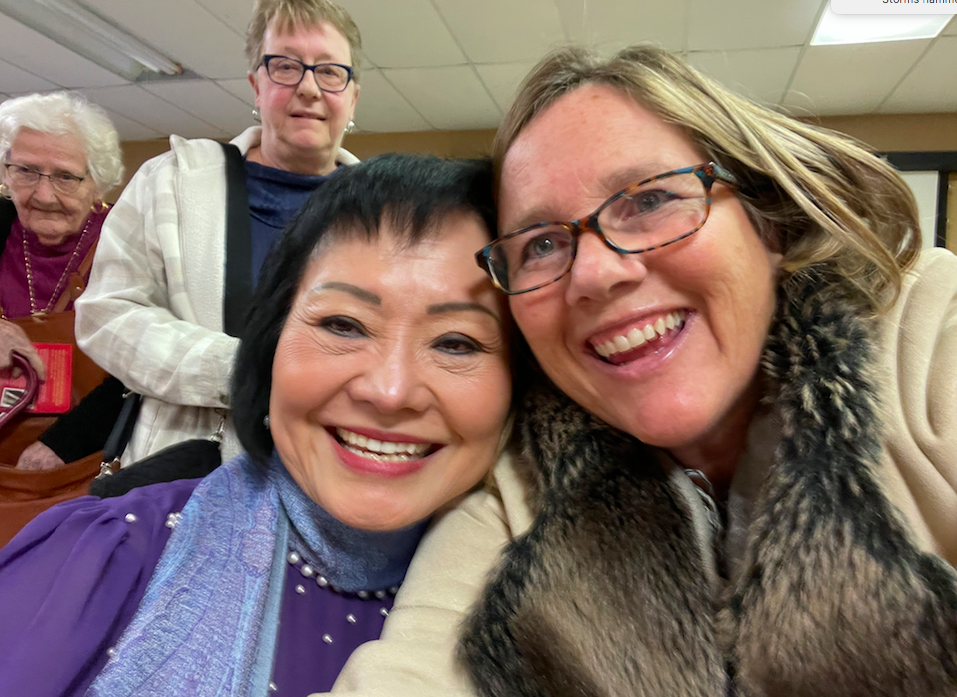
I was very fortunate last week to meet Kim and hear her speak about the day her village was bombed, the famous photo and how it impacted her life, and her path to faith, forgiveness and finding peace in her heart and happiness as a wife, mother and through her work as a UNESCO Global Ambassador for Peace.
Kim, whose name means Golden Happiness in Vietnamese was just nine years old when the Viet Cong invaded her village. The villagers, especially the children, were sent to a nearby temple where they would be safe. When the four bombs hit her village, she ran. The searing heat from the napalm at 1200 degrees Celsius burned the clothes off her body and much of her skin.
Presumed dead, her body was taken to the morgue where she lay motionless, in agony for three days before her parents found her and moved her to a hospital. She was transferred to a burn hospital where she spent the next 14 months.
Ten years later, Kim was studying to be a doctor when the South Vietnamese government had her dismissed from medical school. They wanted her to be a national symbol and puppet spokesperson, but as Kim puts it, she did not want to give them the power over her story and refused to comply. She was sent to Cuba for the next six years, where she met her husband, a North Korean.
Returning from their honeymoon in Moscow, Kim knew one of her only chances for freedom was to defect. When their plane stopped in Gander, Newfoundland for an hour layover and to refuel, she knew what she had to do. She and her husband got off the plane and sought political asylum in Canada.
For many years, the emotional and physical scars of her ordeal (she has undergone 17 surgeries over the years) filled her heart with hatred. But she realized she had two choices, to change her heart, or die from hatred. She said it took years to find peace and forgive her enemies.
She told one story of going to Washington in 1996 and visiting the Vietnam War Memorial. It was a large public event and she was asked to speak. Many Vietnam vets were attending, including the soldier who planned the attack on her village (the pilot who dropped the bombs was actually Vietnamese).
This soldier, named John, came forward and said he had never forgiven himself for the past 24 years for what he did to her and her village. She hugged him, and realized for the first time she was not the only one who suffered that day. They remain close friends to this day.
Kim’s message is still relevant in today’s troubled world: peace, love and forgiveness will always be more powerful than hatred.
I was struck by how beautiful, inside and out Kim was. She radiated peace, goodness, and loved to laugh. Her favourite saying was “No way, Jose!” and she said “eh?” several times, declaring herself a true Canadian.
In 1997, she founded the Kim Foundation International, a nonprofit organization dedicated to helping child victims of war. She still lives in Ajax, Ontario with her husband, and has three children and several grandchildren.
She also shared her secrets for living a happy, successful life:
Free your heart from hatred Free your mind from worry Live simple Give more Expect less
This week is Remembrance Day. As we honour the men and women who sacrificed their lives for our country, and the victims of war, remember the words of the napalm girl, that peace, love and forgiveness will always be more powerful than hatred.
Retirement has been a difficult transition for me. I’m coming up on two years now and I still haven’t adjusted as well as some people do. I was sitting this afternoon, watching the rain pelt against the window obscuring a grey fall transition to winter, when it hit me.
Nobody needs me anymore.
I was always in middle management in my career. Always giving vague direction and punishing people for not reading my mind as the old Dilbert cartoon used to read. My specialty was putting out fires. People came to me looking for answers and I tried my best to write a plan on a cocktail napkin and hope it worked well enough to fool my superiors.
My days were an endless mix of planning, timesheets, scheduling, maintenance and finding the best ways to get the most out of each and every person who worked for me. I loved being needed at work even if I didn’t always love the work itself. Fast forward two years later and the only decisions I have to make are which trail to walk the dog on and what we are having for supper. Work doesn’t need me anymore.
My kids certainly don’t need me either. Both are out living their lives, one almost finished university (so proud) and looking at where she will end up next, the other knee-deep studying whatever biochemistry is. Except for rare conversations about new musical groups (Red Clay Strays and Tyler Childers) and the odd supper, they are completely and utterly embracing their own lives. No more rides to a remote hockey rink on a snowy winter road, no more conversations asking for advice on relationships. They don’t need me anymore.
Honestly the only person who even tolerates me is my life partner. Truthfully, I think if she had to pick between me and the dog, we all know who would win. Bookending Monday badminton and Tuesday line dancing is Friday writing groups and Saturday stock sport tournaments. She has embraced retirement with gusto and I am glad for this. She doesn’t need me anymore.
All the influencers talking about retirement being the golden age should have their heads examined. For some, retirement is a time to worry, to wander aimlessly trying to find direction and meaning in their lives, all the while wondering if their investments will support them until they leave this earthly abode.
I know that some of you are saying to yourself, what does he have to whine about? Lives on a lake, semi-good looking, gorgeous wife, yada, yada, yada but for some, myself included, the emptiness from not being needed outweighs all aspects in life.
Tread well into retirement my friends, sometimes it’s not all as advertised.
And if you see a white Dodge Cummins diesel with a 30-foot trailer rolling down the 401 at a buck twenty, festooned with Kingston BMW logos on it, know that someone is still depending on me to deliver a car that is worth more than my last annual salary. I guess someone still needs me……….
I remember it clearly. The year was 1992. Dave and I had just got married on a beautiful fall day, October 3rd and returned home from our honeymoon to watch the final games of the World Series in two lawn chairs in our empty apartment in Port Credit. 41-year old Dave Winfield swings and hits a two-run double in the eleventh inning of Game 6 against the Atlanta Braves to win the game, making the Toronto Blue Jays the first Canadian team ever to win the World Series of baseball.
Growing up in Toronto, I’ve been cheering on the boys in blue since their first at bat in April 1977, when they won their first game against the Chicago White Sox in a snowstorm at the old Exhibition Stadium. I remember going to quite a few of those early games with snowflakes in the air. In those days, Dominion grocery offered $4 tickets and all of us Ryerson students would skip classes and pile into the stadium to eat 60-cent hot dogs and drink $2 beers. When the Skydome and its retractable roof opened its doors in 1989, we felt like we were watching games in luxury, pure luxury.
Now the Jays are making another run at the coveted crown of baseball. It’s a Cinderella story. A bunch of rag-tag guys who started the season playing less than 500 ball, guys like Nathan Lukes who almost gave up the game after playing in the minors for many years and Addison Barger who just started playing in the majors in 2024.
This team has heart and a deep love for each other and the game.
My favourite moment so far was when Vladimir Guerrero Jr. fanned Alejandro Kirk with a towel after his epic run from second base to score home in Game 5 of the ALS championship series against Seattle. That’s love.
Or this TSN post-game interview with Davis Schneider after Game 1 of the World Series who confessed that Barger, the night before hitting Friday night’s grand slam in Game 1 against LA slept on Schneider’s couch since his own place was full of visiting family.
Yes, this band of Boys in Blue deserve our respect. They deserve to win.
This week’s #HappyAct is to wear your bandwaggoner badge with pride and cheer on the boys in blue. Go Jays Go!
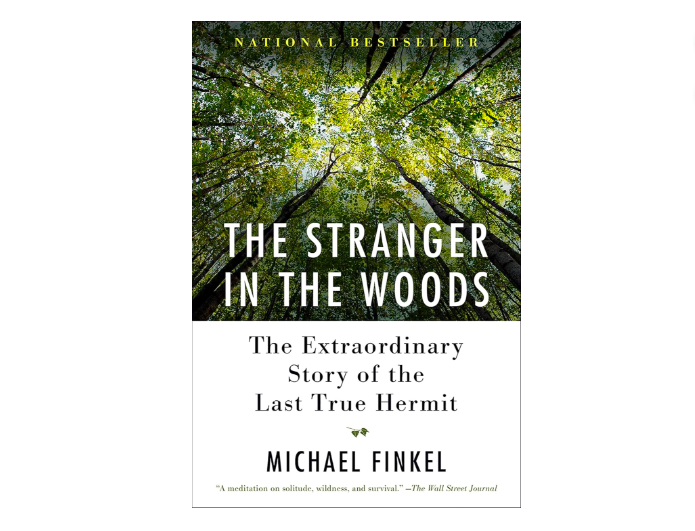
It’s the story of Christopher Knight, an average guy who at the age of 26, decided to live in the Maine woods on his own and didn’t talk or interact with another human being for the next 27 years.
He didn’t create art, he never kept a journal, he didn’t even talk to himself. He just spent his days in his clearing (the guy didn’t even have a cabin) surviving and existing.
Knight was never lonely during his time in the woods. He would sometimes read or listen to the radio, but spent the majority of his free time sitting in a lawn chair “in quiet contemplation” thinking about wherever his mind went. He claimed he was never bored and didn’t understand the concept of boredom. Boredom only applied to people “who felt they had to be doing something all the time.”
In considering Knight’s motives, Finkel explores various ancient beliefs and customs centred around living a life of solitude.
The first great literary work about solitude was written by a hermit protestor Lao-tzu in the sixth century. In Tao Te Ching, Lao-tzu wrote 81 verses about the pleasure of forsaking society and living in harmony with the seasons. Lao-tzu believed that only through retreat rather than pursuit, through inaction, rather than action, that we acquire wisdom and peace.
Finkel quotes the eighteenth-century philosopher Jean-Jacques Rousseau. “I have become solitary because to me the most desolate solitude seems preferable to the society of wicked men which is nourished only in betrayals and hatred.”
Carl Jung said that only an introvert could see the “unfathomable stupidity of man.” Sartre wrote “Hell is other people.”
Herman Melville who wrote Moby Dick withdrew from public life for 30 years. He wrote, “All profound things are preceded and attended by Silence.”
The greatest philosopher of all time, Dave says, “I prefer to spend my time with dogs than people.”
Knight related to the Greek philosophy of stoicism that held self-control and harmonious existence with nature constituted a virtuous life and you must endure hardship without complaint.
He also felt a kinship with Socrates who said, “Beware the barrenness of a busy life. You become free not when you fulfill your desires, but by eliminating desire. Those with less become content; those with more become confused.”
So what learnings can we take away from these philosophies and Knight’s experience? I’m not suggesting we turn our back on society, but perhaps we can experience a greater peace, stillness and happiness by seeking moments of solitude.
I asked at the start how many days can you go without speaking to another soul? I’ve learned for me the answer is three days. I can spend three days quietly at home, at peace in nature and be happy. After three days, I seek human interaction and connection and will reach out to friends or plan some social activity.
I have blogged before about the epidemic of loneliness. It’s important to delineate between being alone and being lonely.
Solitude when chosen, can be bliss, but when it is forced upon mankind, it can be torturous and is still to this day one of the great punishments inflicted on people.
Finkel makes this point in the book, quoting US Senator John McCain who spent more than five years as a prisoner of war in Vietnam, two of them alone. McCain described his experience as “awful. It crushes your spirit. The onset of despair is immediate.”
Solitude must be a choice.
It seems only fitting to bestow the final words to Knight: “If you like solitude, you are never alone. What I miss most in the woods is somewhere in between quiet and solitude. What I miss most is stillness.”
“Solitude bestows an increase in something valuable…Solitude increased my perception. But here’s the tricky thing: when I applied my increased perception to myself, I lost my identity. There was no audience, no one to perform for. There was no need to define myself. I became irrelevant.”
His isolation felt like a communion. “My desires dropped away. I didn’t long for anything. I didn’t even have a name. To put it romantically, I was completely free.”
This week’s #HappyAct is to experience solitude. Be happy and be free.
Leave a comment: how many minutes, hours or days could you go without talking to someone?





 Happy Act